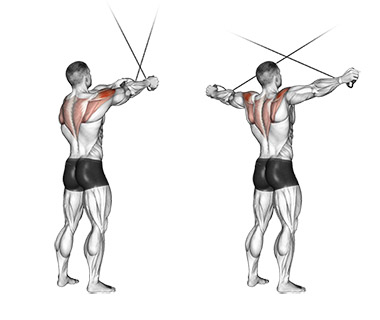
To do a cable rear delt reverse fly, set the pulleys high, cross the handles, hinge slightly, and pull your arms out with a soft elbow bend. It targets the rear delts most, with traps assisting. The most common mistake is turning it into a row by bending the elbows, so keep the elbow angle fixed and move from the shoulder. Progress by adding reps or a longer pause at the peak before adding load.
Step-by-step form
- Set up: Set both pulleys high and attach single handles.
- Brace: Cross the cables and grab opposite handles.
- Initiate: Step back, hinge slightly, and keep ribs stacked.
- Main rep path: Pull arms out to the sides with soft elbows.
- Hardest point: Pause with hands in line with shoulders.
- Finish: Return slowly until the cables lightly cross again.
- Reset: Keep tension in the cables and repeat.
Who this variation is for
This is for lifters who want precise rear-delt work with steady tension through the range.
- Best fit: Lifters building rear-delt size and shoulder balance
- Not ideal when: Shoulder irritation shows up in the stretched position
- Better option if not ideal: Dumbbell reverse fly or face pull
Setup and equipment
Pulley height and body angle drive the line of pull, so set them with intent.
- Setup position: Slight hinge, soft knees, chest down but spine neutral
- Equipment setup checks: Pulleys even, handles secure, cables clear
- Start load/resistance: Light to moderate load for 12-15 clean reps
- Bracing and breathing plan: Inhale as you return, exhale as you pull
Muscles worked and movement pattern
This is horizontal abduction with steady cable tension. You should feel the rear delts more than the upper traps.
| Role | Muscles |
|---|---|
| Primary | Rear delts |
| Secondary | Traps, rhomboids |
| Stabilizers | Rotator cuff, core |
At a glance
- Variation: Cable rear delt reverse fly
- Best for: Rear-delt hypertrophy and shoulder balance
- Primary muscles: Rear delts
- Equipment: Dual cable station with handles
- Difficulty: Intermediate
- Primary goal: Muscle growth
Form tips for better reps
- Keep elbows softly bent and fixed.
- Pull out, not back.
- Pause with hands in line with shoulders.
- Keep ribs down and neck long.
- Lower for 2-3 seconds every rep.
Common mistakes and how to fix them
| Mistake | Why It Happens | Fix |
|---|---|---|
| Turning it into a row | Elbows bend too much | Keep a soft bend and move from the shoulder. |
| Shrugging at the top | Traps take over | Pull shoulders down before each rep. |
| Losing cable tension | Standing too close | Step back until the cables stay loaded. |
What you should feel
- At the start of each rep: Light tension through rear delts
- During lowering or lengthening: A controlled stretch across the back of shoulders
- During the hardest point: Squeeze in rear delts, not neck tension
- At lockout or finish: Arms in line with shoulders, no shrug
- If you feel joint pain: Shorten range and reduce load
Regressions (Easier Versions)
- Lighter load with a shorter range and slower lower
- Chest-supported dumbbell reverse fly for extra stability
Progressions (Harder Versions)
- 2-second pause at the peak of each rep
- 1.5 reps with a full fly plus half fly
Alternatives by Equipment
| Alternative | When to use it | Why it helps |
|---|---|---|
| Dumbbell reverse fly | When cables are busy | Easy setup with similar pattern |
| Machine rear delt fly | When you want more stability | Fixed path helps control range |
| Face pull | When you want more upper-back work | Adds external rotation and scapular control |
How many sets and reps to do
Pick a track based on your goal. Keep the reps smooth and the shoulder position stable.
For Strength
- Sets: 3-4
- Reps: 8-10
- Rest: 2 min
- Frequency: 1-2x/week
- Progression rule: Add reps before adding load.
For Muscle Growth
- Sets: 3-5
- Reps: 12-20
- Rest: 60-90 sec
- Frequency: 2-3x/week
- Progression rule: Add reps first, then add a small load jump.
For Skill / Return to Training
- Sets: 2-3
- Reps: 10-12
- Rest: 60-90 sec
- Frequency: 2x/week
- Progression rule: Keep pauses and tempo strict before loading.
4-week example progression
| Week | Sets x reps | Load or difficulty target | Goal |
|---|---|---|---|
| 1 | 3 x 12 | Baseline load | Smooth range, no shrugging |
| 2 | 3 x 14 | Same load | Add controlled reps |
| 3 | 4 x 12 | +1-2 kg | Higher intensity, same tempo |
| 4 | 4 x 13 | Same load | Repeat clean reps under fatigue |
Where to put this in your workout
- Primary slot: After your main pressing or pulling work.
- Best pairing: Pair with face pulls or a row variation.
- Fatigue note: Leave 1-2 reps in reserve on early sets.
Safety and Contraindications
If the front of the shoulder feels cranky, shorten the range and slow the lowering.
- Stop the set if: Sharp shoulder pain or tingling appears
- Use caution if: You have a recent shoulder flare-up
- Safer substitutions: Chest-supported reverse fly, face pull
FAQs
Should my elbows be straight or bent?
Keep a soft bend and hold it. If you straighten fully, stress shifts to the elbow and shoulder.
How high should I raise my arms?
Bring the hands to shoulder height. Higher than that usually turns it into a shrug.
Can I do this seated?
Yes, as long as the line of pull still matches shoulder height. Seated can help reduce body swing.
How often should I train rear delts?
Most lifters do well with 2-3 sessions per week. Keep volume moderate and quality high.
Related Exercises
Related Workouts
- No related workouts yet.