How to Do the Behind-the-Back Barbell Wrist Curl
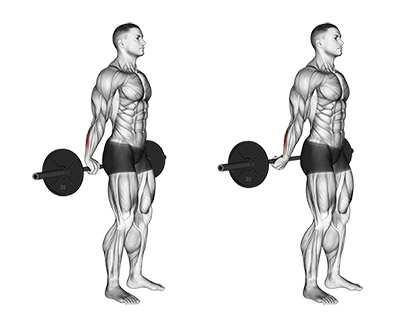
The behind-the-back barbell wrist curl is a simple forearm exercise that mainly targets your wrist flexors for grip strength and forearm size. Hold a barbell behind you with straight arms, let it roll toward your fingers, then curl your wrists up and lower slowly. It’s a good finisher for lifters who want extra forearm work without complicated setup.
What Muscles Does the Behind-the-Back Barbell Wrist Curl Work?
Behind-the-back wrist curls primarily work the wrist flexors in your forearms, which curl your wrist and help with grip endurance. Your finger flexors and brachioradialis assist, while your upper back and core keep your posture steady as the bar hangs behind you.
| Role | Muscles | What they do |
|---|---|---|
| Primary | Wrist flexors (forearms) | Curl the wrist and control the lowering as the bar rolls toward the fingers. |
| Assist | Finger flexors, brachioradialis | Help maintain grip on the bar and stabilize the forearm. |
| Stabilizers | Upper back, core | Keep you tall so you don’t lean forward or bounce reps. |
How Do You Perform the Behind-the-Back Barbell Wrist Curl?
Stand tall holding a barbell behind you with straight arms, let the bar roll toward your fingertips to stretch the forearms, then curl your wrists up as high as comfortable and lower slowly without bending your elbows.
- Set up safely: If possible, set the bar on low hooks behind you (rack or Smith machine) so you can unrack at hip height without awkwardly reaching down.
- Choose a bar: Use a barbell, EZ bar, or a fixed-weight curl bar—whatever lets you go light and control reps.
- Set your stance: Stand tall with feet hip-width. Hold the bar behind your glutes with arms straight and shoulders relaxed (not shrugged).
- Grip: Start about shoulder-width. If your wrists feel pinchy, widen the grip slightly.
- Lower into the stretch: Let the bar roll down toward your fingertips until you feel a strong forearm stretch. Keep elbows straight.
- Curl the wrists: Flex your wrists to bring the bar back up, aiming for a smooth squeeze—not a yank.
- Control the return: Lower for 2–3 seconds and repeat. Stop if you get sharp wrist pain (a mild stretch/burn is normal).
What Are the Benefits of the Behind-the-Back Barbell Wrist Curl?
Behind-the-back wrist curls are an easy way to add targeted forearm volume with a big stretch and minimal setup.
- Forearm hypertrophy: The long-stretch position can be great for building the wrist flexors when reps are controlled.
- Grip endurance: Helps with long sets of pulling, carries, and bar-holding tasks.
- Low time cost: Fits at the end of almost any workout as a quick finisher.
- Easy to load: Small weight jumps and rep progressions work well.
What Are Common Behind-the-Back Wrist Curl Mistakes?
The #1 mistake is using too much weight and turning it into a sloppy partial rep.
Are you bending your elbows?
Problem: It becomes a mini biceps curl and your wrists stop doing the work.
Why it happens: The load is too heavy or you’re rushing.
Fix: Lock elbows straight and drop the weight until the movement is all wrist.
Are you bouncing the bottom?
Problem: You use momentum and lose the stretch where the forearms work hardest.
Why it happens: Trying to “get more reps” without control.
Fix: Slow down and pause for a half-second in the stretched position.
Are your wrists getting cranky?
Problem: You feel sharp pain in the wrist joint.
Why it happens: Too much range, too much load, or a grip width that doesn’t suit you.
Fix: Reduce range, use a lighter bar (EZ bar can help), and keep the bar closer to your body.
Are you leaning forward?
Problem: The bar drifts away from you and you compensate with posture.
Why it happens: Trying to create space for the bar instead of standing tall.
Fix: Keep the bar close to your glutes and stay stacked (ribs down, tall posture).
Is the Behind-the-Back Wrist Curl Good for Beginners?
Yes—if you start light and keep reps controlled. Many beginners should skip the empty 45 lb bar and use a fixed curl bar, an EZ bar, or even dumbbells first, then switch to this variation once their wrists tolerate the stretch.
How Much Weight Should You Use for Behind-the-Back Wrist Curls?
Use the lightest load that still gives you a strong forearm pump without losing control. This lift usually works best in moderate-to-high reps, not heavy singles.
| Goal | Sets | Reps | Rest | Notes |
|---|---|---|---|---|
| Technique / tendon tolerance | 2–3 | 12–20 | 45–75 sec | Keep it easy; smooth tempo and comfortable range. |
| Hypertrophy | 3–5 | 10–20 | 60–90 sec | 2–3 seconds down; stop before elbows bend. |
| Finisher | 2–4 | 20–30 | 30–60 sec | Light banded pump sets work too if a bar bothers wrists. |
Progression: Add reps first. When you can hit the top end of the rep range with clean tempo, add a small weight jump (2.5–5 lb total) and start again at the lower end.
How Often Should You Do Behind-the-Back Wrist Curls?
Most people do well with 2–4 sessions per week, often at the end of upper-body days.
- Pair it: include some wrist extensor work too (reverse wrist curls or rubber-band finger extensions) to keep forearms balanced.
- Keep it short: forearms recover well, but wrists can get irritated if you force range or chase load.
What Are the Best Alternatives to Behind-the-Back Wrist Curls?
If the behind-the-back setup bothers your wrists, try seated wrist curls, cables, or dumbbells to control the angle and range more easily.
Alternative Exercises



Seated dumbbell wrist curl
Best for: controlling range and wrist angle one side at a time.
Key difference: forearm is supported; easier to avoid body English.
Difficulty: easy.
EZ-bar or cable wrist curl (in front)
Best for: smoother resistance and less wrist strain for some lifters.
Key difference: you can adjust hand position and keep tension constant.
Difficulty: easy to moderate.
Reverse wrist curl
Best for: training wrist extensors to balance forearm work.
Key difference: targets the opposite side of the forearm.
Difficulty: easy.
Farmer’s carries / towel hangs
Best for: grip strength and endurance.
Key difference: less wrist flexion isolation; more whole-hand grip.
Difficulty: moderate to high.
What Equipment Do You Need?
You need a barbell (or EZ bar/curl bar) and enough space to hold it behind you.
- Better for most people: an EZ bar or fixed curl bar, because it’s easier to go light.
- Optional: lifting straps if your grip fails before your forearms (use sparingly if grip is a goal).
- At home: dumbbell wrist curls or band wrist curls are simpler and often more comfortable.
Frequently Asked Questions
Build your plan with Momentum.
Get structured workouts based on your goals, equipment, and training history.