How to Do Machine Back Extensions
Machine back extensions are a guided posterior-chain movement that target the hamstrings and glutes with stable support. Set the foot and back pads so you can move through a clean hip extension pattern, then drive the lever back with control. This variation is useful when you want measurable loading without balancing a free-body setup.
What Muscles Do Machine Back Extensions Work?
Machine back extensions primarily train the hamstrings and glutes as hip extensors. The spinal erectors and deep core brace to keep trunk shape while the machine guides the motion.
| Role | Muscles | Function in machine back extension |
|---|---|---|
| Primary | Hamstrings | Extend the hips against machine resistance |
| Secondary | Glutes | Help drive lockout and maintain hip position |
| Stabilizers | Spinal erectors, abdominals | Keep torso stable and reduce unwanted spinal motion |
How Do You Perform Machine Back Extensions?
Set the machine so your hips can extend freely, then push the lever by extending at the hips while keeping your spine neutral.
- Sit with your pelvis against the seat pad and place feet securely under the foot support.
- Adjust the upper pad so it sits across the upper back, not the neck.
- Choose a conservative starting load and brace your core before moving.
- Hinge slightly forward from the hips, keeping chest and neck in line.
- Drive the upper pad backward by extending your hips until your torso reaches a neutral finish.
- Pause for a brief count, then return under control without dropping into the next rep.
What Are the Benefits of Machine Back Extensions?
This machine variation makes posterior-chain loading simple, stable, and easy to progress.
- Predictable movement path: Fixed mechanics reduce setup variability between sets.
- Simple load progression: Small plate or pin changes let you progress without major jumps.
- Lower balance demand: You can focus on hip extension quality instead of stability challenges.
- Accessory lift efficiency: Fast setup makes it practical at the end of leg or pull sessions.
Common Machine Back Extension Mistakes and Fixes
The most common issue is pushing into lumbar extension instead of true hip extension.
Why does my lower back feel compressed at lockout?
Problem: You finish by arching the lumbar spine.
Why it happens: Load is too high or lockout is forced past neutral.
Fix: Reduce weight and stop when torso and hips form one line.
Why do I feel almost nothing in glutes and hamstrings?
Problem: Pads are misadjusted and hip motion is restricted.
Why it happens: Foot or upper pad position does not match your limb length.
Fix: Re-adjust pad positions so you can hinge and extend smoothly through hips.
Why am I bouncing reps?
Problem: Momentum replaces controlled muscle work.
Why it happens: Starting too heavy and skipping eccentric control.
Fix: Use a 2-second lowering phase and remove load until form stays consistent.
Why does my neck tighten up?
Problem: Head lifts and cervical spine overextends.
Why it happens: You try to look up during effort.
Fix: Keep chin slightly tucked and gaze neutral.
Is Machine Back Extension Good for Beginners?
Yes. Beginners usually find the machine version easier to learn than free-body setups because support points are clear and load can be kept low. Start with strict tempo and stop each rep at neutral.
How Much Weight Should You Use for Machine Back Extensions?
Use a load that lets you keep a clean hinge and controlled top position for every rep.
| Goal | Sets | Reps | Rest | Load guideline |
|---|---|---|---|---|
| Technique | 2 to 3 | 10 to 12 | 60 to 90 sec | Light, smooth tempo |
| Hypertrophy | 3 to 4 | 8 to 12 | 90 to 120 sec | Last 2 reps challenging with clean form |
| Strength-endurance | 3 | 12 to 15 | 60 to 90 sec | Moderate, no momentum |
Progress load by the smallest machine increment once you hit the top rep target across all sets.
How Often Should You Do Machine Back Extensions?
Most lifters do well with 1 to 3 sessions per week, depending on deadlift and squat volume. Keep one heavier day and one lighter tempo day if posterior-chain fatigue builds up.
How Does Machine Back Extension Compare to Bodyweight Back Extension?
Machine back extension is easier to load progressively, while bodyweight back extension often gives more freedom to practice pure movement control.
| Variation | Best for | Main tradeoff |
|---|---|---|
| Machine back extension | Structured loading and repeatable setup | Less freedom in movement path |
| Bodyweight back extension | Motor control and low-load technique work | Harder to quantify progression |
What Are the Best Alternatives to Machine Back Extensions?
If your gym lacks this machine, use alternatives that still train hip extension under control.
Alternative Exercises
_Thighs_small.jpg&w=3840&q=75)
_Hips_thumbnail%403x.jpg&w=3840&q=75)

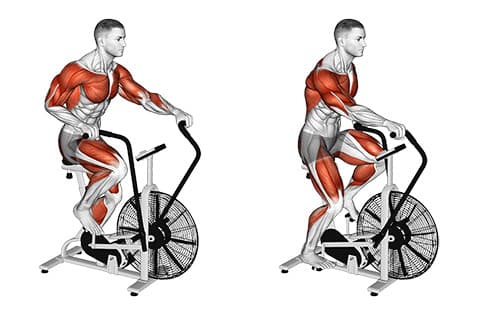

Romanian deadlift
Best for: High-load posterior-chain development.
Key difference: Free-weight hinge with more balance and grip demand.
Difficulty: Moderate.
Cable pull-through
Best for: Hip extension practice with lower spinal loading.
Key difference: Resistance line from behind encourages hip drive.
Difficulty: Low to moderate.
45-degree back extension
Best for: Similar pattern without a plate-loaded lever machine.
Key difference: Bodyweight base with optional held load.
Difficulty: Moderate.
What Equipment Do You Need?
You need a lever or selectorized back extension machine with adjustable foot support and upper pad. Keep a small towel nearby if pad pressure feels uncomfortable on the upper back.
Frequently Asked Questions
Build your plan with Momentum.
Get structured workouts based on your goals, equipment, and training history.