How to Do a Box Jump (Step-by-Step Form and Safety Cues)
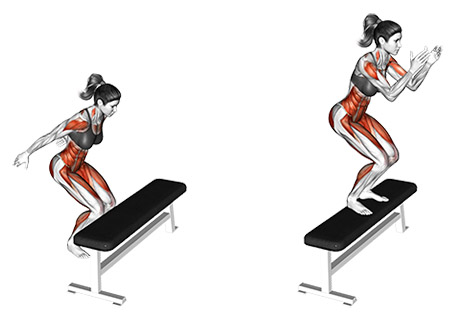
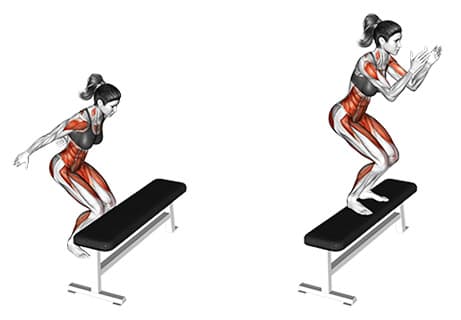
To do a box jump, stand in front of a sturdy box, dip quickly, swing your arms, and jump up so you land softly with both feet fully on the box. Stand tall, then step down under control. It’s a great option for building power when you keep reps low and landings quiet.
What Muscles Does Box Jump Work?
Box jumps primarily use your quads and glutes to extend the hips and knees explosively, with calves contributing at takeoff. Your hamstrings and core help you load the jump, stabilize the landing, and keep your knees tracking well.
| Role | Muscles | Function |
|---|---|---|
| Primary | Quadriceps, glutes | Drive hip and knee extension to leave the floor and stand up on the box. |
| Secondary | Calves, hamstrings | Add force at takeoff and help control landing positions. |
| Stabilizers | Core, glute med/min | Keep your trunk steady and knees tracking on landing. |
How Do You Perform Box Jump?
Set up in front of a sturdy box, dip into a quick athletic quarter-squat, then jump up and land softly with both feet flat on the box and knees tracking over toes; stand tall and step down under control.
- Pick the right height: Start lower than you think; you should be able to land quietly without tucking into a deep squat.
- Set your distance: Stand close enough that you jump mostly up (not long), usually 6–18 inches from the box.
- Athletic stance: Feet about hip-width, knees soft, chest tall, eyes forward.
- Load the jump: Dip quickly into a quarter squat and swing your arms back.
- Jump up: Drive through the whole foot, swing arms hard, and think “up” more than “forward.”
- Land softly: Feet fully on the box, knees tracking over toes, torso stacked; absorb with a small knee/hip bend.
- Stand tall: Fully extend hips and knees on top of the box.
- Step down: Step off one foot at a time (most people handle this better than jumping down for repeated reps).
Quick quality check: if you land loud, clip the box, or need a deep squat to “save” the rep, lower the box and earn height with cleaner landings.
What Are the Benefits of Box Jump?
Box jumps train power and coordination because you have to produce force fast and “stick” a clean landing.
- Lower-body power: Great for improving explosive hip and knee extension.
- Lower landing impact (vs floor jumps): Landing on a box reduces the drop distance compared to repeated jump squats.
- Technique feedback: Quiet landings tell you you’re controlling the rep; loud landings usually mean you’re rushing or overreaching.
- Easy to dose: You can keep volume low and rest high, which fits power training well.
What Are Common Box Jump Mistakes?
The #1 mistake is choosing a box height that forces ugly landings and knee collapse.
Is the box too high for you to land softly?
Problem: You land in a deep squat, feet slap loudly, or knees cave in.
Why it happens: Height becomes the goal instead of quality.
Fix: Lower the box and earn height by keeping landings quiet and stable.
Are you jumping forward into the box?
Problem: You clip the shins or land with toes hanging off the edge.
Why it happens: You’re standing too far away or reaching forward.
Fix: Stand closer and think “jump up, then place feet.”
Are your knees collapsing inward on landing?
Problem: Knees cave and you feel unstable.
Why it happens: You’re landing too narrow or not using the hips.
Fix: Land hip-width, push knees slightly out, and “screw” feet into the box for traction.
Are you doing high reps with short rest?
Problem: The first few reps are sharp, then everything turns into survival jumps.
Why it happens: Plyometrics need freshness to stay powerful and safe.
Fix: Keep reps low (3–6) and rest longer (60–120 seconds) so every jump looks the same.
Is Box Jump Good for Beginners?
Yes—if you start with a low box and treat each rep like a single, high-quality jump. Beginners should master bodyweight squats, basic landing mechanics, and low jump-and-stick drills before pushing height or doing high-volume sets.
How High Should Your Box Be for Box Jumps?
Box jumps don’t use external weight—the “load” is the box height and the speed of the rep.
Practical height rules:
- Start low: A height that lets you land with feet flat and knees tracking well, without a deep squat.
- Progress slowly: Add 2–4 inches only if you can keep landings quiet and consistent.
- Use step-downs: Especially in higher-volume work, stepping down reduces repeated impact.
Programming (power focus):
| Goal | Sets | Reps | Rest |
|---|---|---|---|
| Power / speed | 3–6 | 3–5 | 60–120 sec |
| Conditioning (careful) | 3–5 | 6–10 | 60–90 sec |
If your jump height drops or landings get loud, cut the set—fatigue turns box jumps into a different exercise.
How Often Should You Do Box Jump?
Most people get the best results with box jumps 1–2 times per week, placed early in the workout while you’re fresh.
- Put them after a general warm-up and before heavy strength work.
- Pair well with lower-body strength (squats, deadlifts) or sprint work as a power primer.
How Does a Box Jump Compare to a Jump Squat?
Both train explosive leg drive, but box jumps usually let you land with less drop distance, while jump squats keep you landing back on the floor every rep.
| Exercise | Best for | Tradeoff |
|---|---|---|
| Box jump | Power with a clearer “stick the landing” target | Needs a safe, stable box and good judgment on height. |
| Jump squat | Simple conditioning or power without equipment | More repeated landing impact on the floor. |
What Are the Best Alternatives to Box Jump?
If you don’t have a box (or you want a different power stimulus), these alternatives hit similar goals.
Alternative Exercises

-(female)_small.jpg&w=3840&q=75)
_Thighs_small.jpg&w=3840&q=75)
Broad jump
Best for: Horizontal power and athletic “push off” strength.
Key difference: You jump forward, so deceleration control matters more.
Difficulty: Medium.
Squat jump (jump-and-stick)
Best for: Learning takeoff and landing mechanics with no box.
Key difference: You land back on the floor every rep.
Difficulty: Easy → medium.
Step-up (fast concentric)
Best for: Lower-impact power work and knee-friendly training.
Key difference: No flight phase; easier to control volume.
Difficulty: Easy → medium.
Kettlebell swing
Best for: Hip power and conditioning with minimal joint impact.
Key difference: Hinge-based power, not a jump.
Difficulty: Medium.
What Equipment Do You Need?
You need a sturdy box or platform that won’t slide, plus enough clear space to jump safely.
- Required: Stable plyo box (or stacked plates/platform that won’t tip), flat non-slip floor.
- Helpful: Shoes with a stable sole (not squishy running shoes), chalk if the surface is slick.
- Home alternative: A solid step, low bench, or stair—start lower and keep reps crisp.
Frequently Asked Questions
Build your plan with Momentum.
Get structured workouts based on your goals, equipment, and training history.