How to Do Burpee Over the Bar
A burpee over the bar is a burpee followed by a quick lateral jump to the other side of a bar or object. Do a clean burpee, stand up fully, then hop over the bar with both feet and land quietly. It’s popular in conditioning workouts because it’s easy to standardize and pace.
What Muscles Does Burpee Over the Bar Work?
Like regular burpees, this variation hits your quads and glutes hard because you’re repeatedly squatting and standing. The push-up portion loads chest and triceps, and your abs work to keep your plank rigid—plus your calves and hips help you hop and land smoothly.
| Role | Muscles | Function in burpee over the bar |
|---|---|---|
| Primary | Quadriceps, glutes | Stand up from the burpee and absorb landings |
| Secondary | Chest, triceps | Press out of the bottom if you include a push-up |
| Stabilizers | Abdominals, calves | Keep plank position tight and control the hop/landing |
How Do You Perform Burpee Over the Bar?
Do a consistent burpee, stand tall, then make a low, efficient lateral hop over the bar with a soft landing so you can repeat fast without tripping.
- Set the “bar”: Use a low, stable object you won’t catch your foot on (a barbell is common, but plates/parallel bars/low hurdles work too).
- Start on one side: Stand close enough that you can drop into the burpee without reaching far for the floor.
- Hands down, feet back: Plant hands and jump or step into a tight plank (ribs down, glutes squeezed).
- Optional chest-to-floor: Lower under control and press up, keeping hips from sagging.
- Feet back in and stand: Bring feet under you and stand all the way up so the rep stays consistent.
- Hop laterally over the bar: Jump with both feet, aim for a low arc, and land quietly with knees tracking over toes.
- Turn and repeat: Pivot to face the bar again (or stay side-on—pick one style and keep it consistent).
What Are the Benefits of Burpee Over the Bar?
Burpee over the bar is a practical conditioning rep because it combines a simple floor transition with a repeatable jump standard.
- Easy pacing skill: The hop forces you to stand up and reset, which helps avoid sloppy half-reps.
- Cardio + full-body work: Legs drive most of the output while trunk and upper body support the transitions.
- Clear rep standard: “Burpee + get over the bar” is straightforward to judge in group workouts.
- Low skill requirement: Compared to complex lifts, it’s accessible once you learn safe landings.
What Are Common Burpee Over the Bar Mistakes?
The biggest issue is turning the “over the bar” part into a high, exhausting jump that breaks your rhythm.
Are you jumping too high?
Problem: You launch upward and land hard, which slows your cycle time and beats up joints.
Why it happens: You’re afraid of clipping the bar or you start too far away.
Fix: Move closer, jump laterally (not up), and aim for a quiet landing on the other side.
Are you cutting the burpee short?
Problem: You skip a stable plank and your hips sag or your back rounds aggressively.
Why it happens: Fatigue and rushing.
Fix: Step back if needed and keep “ribs down, glutes on” as your non-negotiable.
Are you tripping on the turn?
Problem: You spin quickly and your feet clip the bar on the next rep.
Why it happens: You’re turning before you’ve fully landed and stabilized.
Fix: Land first, then pivot. Think “stick → turn,” not “turn mid-air.”
Are your landings loud or knees collapsing?
Problem: Knees cave in or you slam the landing.
Why it happens: You’re chasing speed without control.
Fix: Shorten jump height, keep feet under hips, and cue knees to track over your middle toes.
Is Burpee Over the Bar Good for Beginners?
It can be, but only if you scale it so the floor transition and the hop stay safe. Beginners usually do best with a line hop (jump over a taped line) or a low plate instead of a bar, plus step-back burpees until they can hold a solid plank.
How Do You Scale and Progress Burpee Over the Bar?
Scale down:
- Step-back / step-in burpee: No jumping feet back.
- No push-up: Hold a plank, then bring feet back in.
- Step-over the object: Stand up, then step over instead of hopping.
- Use a line: Jump over a line on the floor for a “zero trip risk” version.
Progress up:
- Add a strict push-up: Keep it clean before you go faster.
- Reduce turn time: Practice landing, pivoting, and re-dropping smoothly.
- Increase density: More reps in the same time without changing form.
Simple pacing rule: Pick a pace you could hold for 2–3 minutes without your plank collapsing. If you’re redlining in the first 20–30 seconds, you started too fast.
Example interval (conditioning): 10 rounds of 20 seconds burpee over the bar / 40 seconds easy movement or rest.
What Are the Best Alternatives to Burpee Over the Bar?
If hopping over an object irritates your feet/ankles or you don’t have a safe setup, these options keep the same conditioning intent.
Alternative Exercises
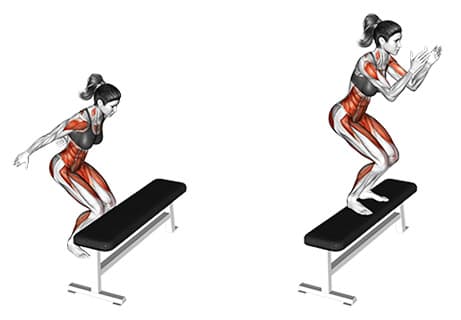

-(female)_small.jpg&w=3840&q=75)
_Thighs_small.jpg&w=3840&q=75)
Lateral burpee over a line
Best for: Same movement pattern with zero equipment.
Key difference: You jump over a line instead of a bar.
Difficulty: Easy to moderate.
Burpee broad jump
Best for: Adding more leg drive and distance.
Key difference: You jump forward instead of laterally.
Difficulty: Moderate to high.
Shuttle sprints
Best for: Conditioning without wrist/shoulder loading.
Key difference: No floor work; intensity comes from speed changes.
Difficulty: Moderate.
What Equipment Do You Need for Burpee Over the Bar?
At minimum, you need a clear floor space and a “bar” you can get over safely. A taped line is the simplest option. If you use a barbell, keep it low and stable, and avoid setups where the bar could roll.
Frequently Asked Questions
Build your plan with Momentum.
Get structured workouts based on your goals, equipment, and training history.