Machine Battle Ropes: How to Do Battle Rope Waves
Machine battle ropes (often just “battle ropes”) are a low-impact conditioning exercise that hits your shoulders, forearms, core, and cardio at the same time. Get into an athletic stance, brace your torso, and create smooth rope waves or slams for short, hard intervals. They’re great for finishers, HIIT, and athletic conditioning.
What Muscles Does Machine Battle Ropes Work?
Battle ropes primarily challenge your cardiovascular system and local muscular endurance in your shoulders and forearms. Your core and glutes stabilize your posture so the waves come from fast arms with a braced, quiet torso.
| Role | Muscles | What they do |
|---|---|---|
| Primary | Cardiovascular system | Drives the conditioning effect during repeated hard intervals. |
| Primary | Shoulders | Create and sustain waves/slams at high speed. |
| Secondary | Forearms, grip | Hold the handles and keep tension through the rope. |
| Stabilizers | Abdominals, glutes | Keep ribs down and pelvis steady so you don’t sway or arch while you work. |
How Do You Perform Machine Battle Ropes?
Set an athletic stance facing the anchor, hinge slightly with ribs down, then move your arms quickly to create consistent rope waves; keep your torso braced and breathe steadily while you work for short intervals, then rest and repeat.
- Set the rope: Face the anchor point with a few feet of slack so the rope can move, but not so much that it’s dead on the floor.
- Grab and stance: Hold the handles with thumbs wrapped. Feet about shoulder-width, knees soft, hips hinged slightly.
- Brace: Ribs down, glutes lightly tight, eyes forward. Your torso should look “quiet.”
- Start waves: Use fast, controlled arm motion to make consistent waves (alternating waves are a good default).
- Keep the pattern: Aim for smooth, even waves—not random flailing. If waves die, step back a bit or increase arm speed.
- Breathe and time it: Exhale as you work, inhale on the brief “easier” moments. Stop the interval if your posture collapses.
What Are the Benefits of Machine Battle Ropes?
Battle ropes let you train hard conditioning with minimal joint impact while building shoulder and grip endurance.
- Low-impact conditioning: You can push intensity without the pounding of running or jumping.
- Shoulder and grip endurance: Great for sports and training styles that demand repeated upper-body effort.
- Simple intensity control: Change work/rest, speed, or rope thickness without learning new technique.
- Scalable for many levels: Beginners can shorten intervals; advanced trainees can go harder with density and longer work bouts.
Which Battle Rope Pattern Should You Use?
If you’re new, start with one pattern and get it smooth before you try to “go harder.”
- Alternating waves (default): easiest to keep consistent. Think “fast hands, quiet torso.”
- Double waves: more symmetrical and often feels harder on the shoulders; shorten work intervals at first.
- Slams: bigger spikes in effort; keep ribs down so you don’t turn every slam into a lower-back arch.
- Circles: tends to smoke shoulders quickly; use lighter ropes or shorter intervals until your shoulders adapt.
What Are Common Machine Battle Ropes Mistakes?
The most common mistake is standing tall and arching your lower back as fatigue hits.
Are you losing your stance and “dancing” around?
Problem: Your hips sway side-to-side and waves get messy.
Why it happens: No brace, and intervals are too long.
Fix: Hinge slightly, ribs down, and shorten intervals until you can stay stable.
Are you shrugging your shoulders up?
Problem: Neck/upper traps dominate and shoulders feel cranky.
Why it happens: Too much tension and not enough shoulder control.
Fix: Think “shoulders down,” keep elbows slightly bent, and use smoother waves instead of aggressive jerks.
Are you turning it into a full-body flail?
Problem: You’re bouncing and yanking instead of creating waves.
Why it happens: Trying to go “harder” by moving everything.
Fix: Keep torso quiet and make the ropes move by speeding up your arms, not by jumping.
Are you holding your breath?
Problem: You gas out early and your trunk gets sloppy.
Why it happens: High effort plus no pacing.
Fix: Use a steady exhale during work and choose intervals you can repeat with similar output.
Is Machine Battle Ropes Good for Beginners?
Yes. Start with short intervals (10–15 seconds), focus on a stable stance, and aim for smooth, repeatable waves. If shoulders feel irritated, keep waves lower (don’t raise hands above shoulder height) and use a slower tempo until tolerance builds.
How Much Weight Should You Use for Machine Battle Ropes?
Battle ropes aren’t about a “weight” number—the difficulty comes from rope thickness/length, wave speed, and work-to-rest.
Use this as a simple starting point:
| Goal | Work | Rest | Rounds | Notes |
|---|---|---|---|---|
| HIIT | 10–20 sec | 40–60 sec | 6–12 | Go hard, then fully recover so quality stays high. |
| Conditioning | 20–40 sec | 20–40 sec | 6–12 | Aim for repeatable pace; posture stays solid. |
| Finisher | 60 sec | 60 sec | 3–6 | Choose a smooth pattern (alternating waves) and stay consistent. |
Progression (simple 4-week): Week 1 do 8×15 sec (45 sec rest). Week 2 keep work and cut rest to 35–40 sec. Week 3 add 2 rounds. Week 4 keep rounds and add 5 seconds of work per interval.
How Often Should You Do Machine Battle Ropes?
Most people can do battle ropes 2–4 times per week, depending on how hard you push intervals.
- As a finisher: 6–10 minutes after lifting.
- As a conditioning session: 10–20 minutes of intervals, 1–3 days/week.
- Pairing ideas: alternate ropes with sled pushes, kettlebell swings, or light goblet squats for full-body conditioning.
What Are the Best Alternatives to Machine Battle Ropes?
If you don’t have ropes, use another interval tool that lets you work hard without complicated technique (rower, bike, sled, swings).
Alternative Exercises
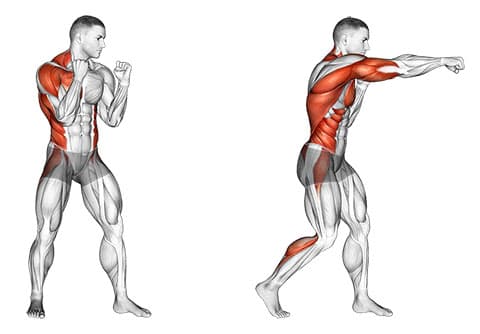
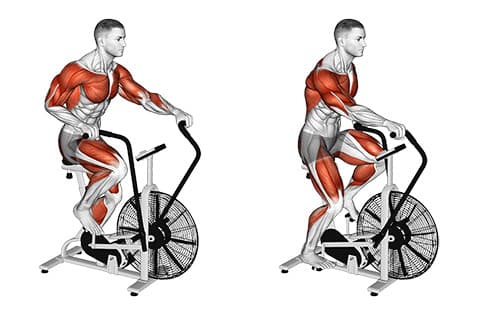
Medicine ball slams
Best for: power + conditioning with minimal equipment.
Key difference: explosive overhead-to-floor pattern instead of continuous waves.
Difficulty: easy.
Rower or ski erg intervals
Best for: measurable pacing and repeatable output.
Key difference: legs and hips contribute more; less shoulder burn for some people.
Difficulty: moderate (pacing matters).
Assault bike / air bike sprints
Best for: brutal conditioning with easy setup.
Key difference: more lower-body involvement; intensity is easy to scale with effort.
Difficulty: high (cardio demand).
Kettlebell swings
Best for: hinge power and conditioning.
Key difference: posterior-chain emphasis instead of shoulder endurance.
Difficulty: moderate.
What Equipment Do You Need?
You need battle ropes anchored to something solid (or a gym station/rope trainer).
- Anchor: a heavy rack, post, or dedicated anchor point; it should not move.
- Space: enough room so you can step back and get the rope moving.
- Grip: gloves are optional, but avoid gripping so hard you can’t keep waves smooth.
Frequently Asked Questions
Build your plan with Momentum.
Get structured workouts based on your goals, equipment, and training history.