How to Do the Barbell Box Squat
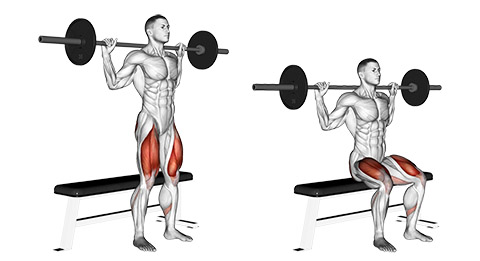
The barbell box squat is a squat variation where you descend to a box to standardize depth and keep reps consistent. Walk out, brace, sit back and down to a light box touch, pause without relaxing, then drive up. It’s useful when you want repeatable depth and tighter, more controlled reps.
What Muscles Does the Barbell Box Squat Work?
The barbell box squat primarily trains your glutes and quadriceps, with adductors and hamstrings assisting as you control the descent and stand back up. Your abs and lower back work hard to keep your torso rigid while the bar stays stacked over your midfoot.
| Role | Muscles | Function in the barbell box squat |
|---|---|---|
| Primary | Glutes, quadriceps | Extend hips and knees to stand up from the box |
| Secondary | Adductors, hamstrings | Assist hip extension and stabilize the bottom position |
| Stabilizers | Abdominals, lower back | Maintain trunk stiffness and bar path over midfoot |
How Do You Perform the Barbell Box Squat?
Set a box at your target depth, descend under control until you lightly touch it while staying tight, pause without rocking, then drive up by pushing the floor away and keeping the bar over your midfoot.
- Set the box height: Pick a height that matches the depth you want to train (parallel is a common starting point). Place the box behind you so it won’t slide.
- Set up in a rack: Unrack like a normal back squat, take 2–3 steps back, and find your stance with your whole foot on the floor (big toe, little toe, heel).
- Brace before you move: Inhale through your nose, expand your beltline, and lock your ribs down so your torso stays solid.
- Sit back and down: Break at hips and knees together. Let your hips travel back while your knees track over your toes (don’t force “vertical shins” if it changes your balance).
- Touch the box softly: Make contact and pause for a beat, but keep tension—don’t “plop,” and don’t relax your hips onto the box.
- Drive up without rocking: Think “push the floor away.” Keep your chest and hips rising together and avoid swinging your torso to get momentum.
- Reset for the next rep: Stand tall, re-brace, and repeat with the same depth and tempo.
Quick form checks (use these mid-set):
- You can pause on the box without rocking back.
- Your feet stay “quiet” (no shifting or heel pop).
- The bar stays over midfoot on the way down and up.
What Are the Benefits of the Barbell Box Squat?
The barbell box squat is a practical way to train consistent depth and tightness when fatigue would otherwise make reps sloppy.
- Repeatable depth: The box gives you a clear target so each rep is closer to the last one.
- Better bottom-position control: Pausing on a box teaches you to stay tight instead of bouncing out of a sloppy bottom.
- Easier to autoregulate: If you’re having an “off” day, you can keep technique clean by reducing load without guessing at depth.
- Strong carryover for bracing: Staying rigid into the touch-and-pause builds trunk control that helps other squat variations.
What Are Common Barbell Box Squat Mistakes?
The biggest mistake is treating the box like a chair and losing tension at the bottom.
Are you crashing onto the box?
Problem: You drop fast and land hard, which turns the box touch into a bounce.
Why it happens: The weight is too heavy, or you’re rushing the eccentric.
Fix: Slow the last third of the descent and “touch quietly.” If you can’t, lighten the load.
Are you rocking back to stand up?
Problem: You shift weight backward and use momentum to get off the box.
Why it happens: You’re sitting too far back or relaxing your hips on the box.
Fix: Keep your midfoot glued down, keep tension, and think “stand straight up,” not “rock then stand.”
Are your knees caving or feet shifting?
Problem: Knees collapse inward or your feet roll to the inside on the touch.
Why it happens: You lose hip tension or your stance is too narrow for your anatomy.
Fix: Widen your stance slightly and cue “knees track over the middle toes” while keeping pressure through the whole foot.
Is your back losing position at the bottom?
Problem: You round or over-arch as you reach for the box.
Why it happens: The box is too low, or you’re bracing late.
Fix: Raise the box and brace before the descent. Stop the set if you can’t keep a stable torso.
Is the Barbell Box Squat Good for Beginners?
Yes—if you already know the basic squat pattern and you use the box as a depth guide, not a place to rest. Beginners usually do best starting with a slightly higher box and a lighter load, focusing on the same bracing and foot pressure every rep.
How Much Weight Should You Use for the Barbell Box Squat?
Start light enough that you can pause on the box without relaxing or rocking. A good rule is to pick a load that leaves you about 2–3 reps in reserve (RIR) while every rep still looks the same.
| Goal | Sets | Reps | Rest | Notes |
|---|---|---|---|---|
| Technique / consistency | 3–5 | 3–6 | 2–3 min | Controlled descent + 1-count pause |
| Strength | 3–6 | 2–5 | 3–5 min | Heavier load, crisp pauses, no grinders |
| Hypertrophy | 3–4 | 6–10 | 90–150 sec | Keep tempo steady and depth consistent |
How Often Should You Do the Barbell Box Squat?
Most people do box squats 1–2 times per week as either a main lift (strength focus) or a secondary squat pattern on a day where they want tighter, more repeatable reps.
How Does the Barbell Box Squat Compare to a Regular Back Squat?
The box doesn’t magically make your squat better—it just gives you a consistent depth target and a “pause” constraint.
- Box squat: Easier to keep depth consistent and practice staying tight in the bottom.
- Back squat: More natural squat groove for most people and usually easier to transfer directly to a back squat 1RM.
What Are the Best Alternatives to the Barbell Box Squat?
If you don’t have a stable box (or you want a slightly different stimulus), these alternatives cover the same “controlled squat” intent.
Alternative Exercises

-(female)_small.jpg&w=3840&q=75)
_Thighs_small.jpg&w=3840&q=75)
Tempo back squat
Best for: Building control without needing a box.
Key difference: Slower eccentric replaces the box touch as the “control” constraint.
Difficulty: Moderate.
Pin squat (from safeties)
Best for: Training a dead-stop start at a fixed depth.
Key difference: You start each rep from a pinned position instead of touching a box.
Difficulty: Moderate to high.
Goblet squat to a target
Best for: Home training or beginners learning consistent depth.
Key difference: Load is front-held and lighter; a bench/box is still a depth guide.
Difficulty: Easy to moderate.
What Equipment Do You Need for a Barbell Box Squat?
You need a barbell, plates, and a stable box or bench that won’t slide. A squat rack with safeties is strongly recommended so you can set pins just below your bottom position in case you miss a rep.
Frequently Asked Questions
Build your plan with Momentum.
Get structured workouts based on your goals, equipment, and training history.