How to Do the Standing Cable Twist (High-to-Low)
To do a standing cable twist, stand sideways to a high cable, brace your core, and pull the handle diagonally across your body while rotating under control. This movement primarily targets the abdominals and obliques. It’s useful if you want a simple way to train rotation without turning your set into a fast, sloppy yank.
What Muscles Do Standing Cable Twists Work?
Standing cable twists primarily train the abdominals (especially the obliques) to create and control rotation. Glutes and hips help you stay stable so the movement comes from a coordinated turn, not a loose spine twist.
| Role | Muscles | What they do here |
|---|---|---|
| Primary | Abdominals | Rotate and control the torso against cable resistance |
| Secondary | Glutes | Help stabilize the pelvis and transfer force through the legs |
| Stabilizers | Shoulders, upper back | Keep arms long and the handle path consistent |
How Do You Perform a Standing Cable Twist?
Set a high pulley, brace, and rotate smoothly as you pull diagonally across your body—your goal is controlled rotation, not speed.
- Set the cable pulley high and attach a handle. Choose a light-to-moderate load you can control.
- Stand sideways to the machine and grab the handle with both hands, wrists neutral, arms straight.
- Step away until there’s steady tension. Set a soft knee bend and brace your abs.
- Start with hands near shoulder height on the cable side, torso tall, ribs stacked over hips.
- Pull the handle diagonally across your body toward the opposite hip while rotating through your torso and hips together.
- Pause for 1 second, then return under control to the start without letting the stack crash.
- Do all reps on one side, then switch and match reps on the other side.
What Are the Benefits of Standing Cable Twists?
Cable twists build rotational strength and control you can use in sports, lifting, and everyday movement.
- Trains rotation with control: You learn to create force and then decelerate it, not just fling yourself around.
- Adjustable and scalable: Load, pulley height, and stance all change the challenge quickly.
- Teaches bracing while moving: You practice staying stacked even as the torso turns.
- Balances anti-rotation work: A good complement to drills like the Pallof press.
What Are Common Cable Twist Mistakes?
Most people miss the point by twisting through the low back and yanking the handle with their arms.
Why do I feel it in my lower back?
Problem: The movement turns into a lumbar twist and extension.
Why it happens: Load is too heavy or you’re trying to move fast for reps.
Fix: Lighten the weight, keep ribs down, and rotate through the torso and hips together.
Why does it feel like an arm exercise?
Problem: Your arms bend and you “row” the handle across.
Why it happens: You’re pulling with elbows instead of rotating.
Fix: Keep arms long and think “turn the chest,” not “pull the hands.”
Why am I losing balance or stepping around?
Problem: Feet shuffle to chase the cable.
Why it happens: Stance is too narrow or you’re rotating too far.
Fix: Widen stance, reduce range, and slow the eccentric.
Why do my knees cave in as I rotate?
Problem: Knee collapses inward on the lead leg.
Why it happens: You’re twisting without controlling the hips.
Fix: Keep pressure through the whole foot and let the hips rotate smoothly instead of buckling.
Are Standing Cable Twists Good for Beginners?
Yes, but start light and keep the range conservative. If you have a history of back pain, prioritize anti-rotation first (like the Pallof press) and only add rotation if you can stay stacked and pain-free.
How Much Weight Should You Use for Cable Twists?
Cable twists should look smooth. If you can’t pause at the end range, or the weight stack is slamming, you’re too heavy.
| Goal | Sets × reps (per side) | Rest | Cue |
|---|---|---|---|
| Technique / control | 2 to 3 × 8 to 12 | 45–75 sec | Slow return; 1 sec pause |
| Hypertrophy / strength | 3 to 4 × 10 to 15 | 60–90 sec | Stay stacked; no yanking |
How Often Should You Do Standing Cable Twists?
1 to 3 times per week is plenty for most lifters. Put them after your main lifts or in a core circuit. If you’re already doing a lot of rotational sport work (golf, tennis, baseball), keep the volume modest and focus on quality.
Cable Twist vs Pallof Press: What’s the Difference?
The Pallof press trains you to resist rotation, while cable twists train you to create and control it.
| Exercise | Main goal | When to pick it |
|---|---|---|
| Cable twist | Controlled rotation | Sport transfer and rotation strength |
| Pallof press | Anti-rotation | Bracing, stability, and “stay square” strength |
What Are the Best Alternatives to Standing Cable Twists?
Choose alternatives based on whether you want rotation, or you want to train the core without rotating.
Alternative Exercises


-(female)_small.jpg&w=3840&q=75)

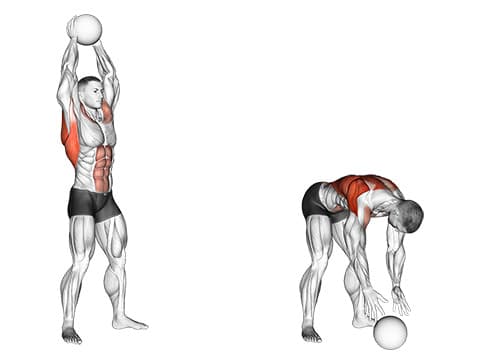
Cable chop / woodchop
Best for: A similar diagonal rotation pattern with different pulley heights.
Key difference: You can bias high-to-low or low-to-high lines of pull.
Difficulty: Moderate.
Pallof press
Best for: Stability and anti-rotation before adding rotation volume.
Key difference: You resist twisting instead of turning.
Difficulty: Low to moderate.
Side plank
Best for: Building lateral trunk endurance with no equipment.
Key difference: Gravity-based anti-rotation and anti-lateral-flexion demand.
Difficulty: Low to moderate.
What Equipment Do You Need?
You need a cable station with an adjustable pulley and a handle. Most people prefer a single handle or rope; both work as long as you can keep wrists neutral and arms long.
Frequently Asked Questions
Build your plan with Momentum.
Get structured workouts based on your goals, equipment, and training history.