Resistance Band Pull-Apart: How to Do Band Pull-Aparts
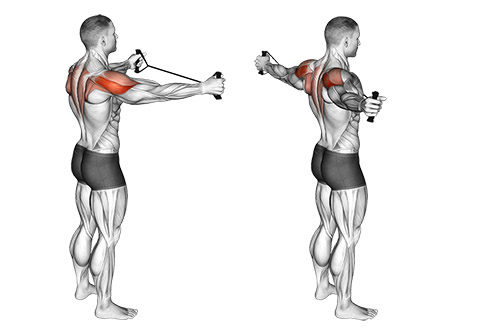
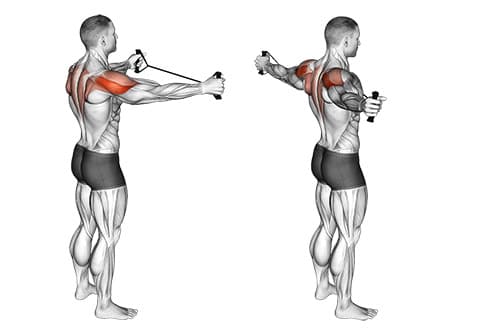
Resistance band pull-aparts are a simple upper-back and shoulder exercise that mainly targets your rear delts and mid-back. Hold a band at shoulder height, keep your ribs down, and pull the band apart by squeezing your shoulder blades—then return with control. They’re great as a warm-up, posture-friendly accessory work, or a low-fatigue way to build rear-delt volume.
What Muscles Does Resistance Band Pull-Aparts Work?
Band pull-aparts primarily train the rear delts to move your arms back, with your mid-traps and rhomboids working to retract and stabilize your shoulder blades. If you keep your ribs down, your core helps prevent you from “cheating” with a big back arch.
| Role | Muscles | What they do |
|---|---|---|
| Primary | Rear delts | Pull your upper arms back and control the return. |
| Secondary | Mid traps, rhomboids | Retract the shoulder blades and keep your shoulders from rolling forward. |
| Stabilizers | Rotator cuff, core | Keep the shoulder joint centered and stop the ribs from flaring as you pull. |
How Do You Perform Resistance Band Pull-Aparts?
Hold a resistance band at shoulder height with straight elbows, set your ribs down, then pull the band apart by moving your hands out to the sides while keeping your shoulders down; pause, then return slowly until the band is just short of slack.
- Choose a band: Pick one that lets you do clean reps without shrugging (most people start lighter than they think).
- Set your grip: Hold the band shoulder-width (or slightly wider) with palms down and arms straight in front of you at shoulder height.
- Stack your posture: Stand tall with a soft knee bend, ribs down, and chin gently tucked (don’t crane your neck).
- Pull apart: Move your hands out and back until the band touches your chest or your arms line up with your shoulders.
- Pause and feel it: Hold for 1 second and think “rear delts and mid-back,” not “upper traps.”
- Return with control: Take 2 seconds to come back until the band is almost slack, then repeat.
What Are the Benefits of Resistance Band Pull-Aparts?
Band pull-aparts are an easy, low-joint-stress way to build rear-delt and upper-back volume.
- Shoulder balance: Adds pulling volume that complements pressing-heavy training.
- Great warm-up: Helps you “find” your upper back before rows, pull-ups, or pressing.
- High-rep friendly: Easy to do for 15–30 reps without much systemic fatigue.
- Travel-ready: A band fits in a bag and gives you a reliable upper-back option anywhere.
What Are Common Resistance Band Pull-Aparts Mistakes?
The most common mistake is going too heavy and shrugging your shoulders up to your ears.
Are you shrugging or letting your shoulders creep up?
Problem: Your neck/upper traps take over and you lose rear-delt tension.
Why it happens: The band is too strong or you’re yanking.
Fix: Use a lighter band and think “shoulders down, chest quiet.”
Are you flaring your ribs to get more range?
Problem: You arch your back to fake the pull.
Why it happens: Limited shoulder mobility or band is too heavy.
Fix: Keep ribs down and shorten the range. Clean reps beat bigger reps.
Are you bending your elbows?
Problem: It turns into a row, not a pull-apart.
Why it happens: You’re trying to use bigger muscles to move the band.
Fix: Lock elbows straight and move from the shoulders/upper back.
Are you snapping the band back?
Problem: You lose control on the return and irritate your shoulders.
Why it happens: Rushing reps.
Fix: Take 2 seconds on the way back and stop just before the band goes slack.
Is Resistance Band Pull-Aparts Good for Beginners?
Yes. Start with a very light band and focus on keeping your ribs down and shoulders relaxed. If you can’t feel your upper back and rear delts without shrugging, make the grip wider and cut the range of motion in half until you can control it.
How Much Band Tension Should You Use for Pull-Aparts?
Pick a band that lets you keep your arms straight and your shoulders down for the full set. A good rule: you should have 2–4 reps in reserve at the end, not a sloppy grind.
| Use case | Sets | Reps | Rest | Notes |
|---|---|---|---|---|
| Warm-up | 2–3 | 12–20 | 30–60 sec | Smooth reps, short pause at full pull. |
| Hypertrophy | 3–5 | 15–30 | 45–90 sec | Stop before shrugging or rib flare starts. |
| “Posture” mini-set | 1–3 | 8–15 | — | Great between desk blocks; keep it easy. |
Progression: First add reps and a 1–2 second pause at full pull. When you can do 3×25 clean reps, switch to a slightly thicker band and go back to 15–20 reps.
How Often Should You Do Band Pull-Aparts?
You can do pull-aparts 2–5 times per week, and many people tolerate them even more often because they’re low fatigue.
- Before upper body days: 2–3 sets of 12–20 to “turn on” your upper back.
- After training: 2–4 sets of 15–30 as a rear-delt finisher.
- Between pressing sets: 10–15 easy reps to keep shoulders feeling good (don’t turn it into a cardio event).
What Are the Best Alternatives to Band Pull-Aparts?
Face pulls and reverse fly variations are the closest swaps when you want the same rear-delt + upper-back focus.
Alternative Exercises


Band or cable face pulls
Best for: rear delts plus external rotation work.
Key difference: you pull toward the face with elbows higher; often easier to “feel” for some people.
Difficulty: easy to moderate.
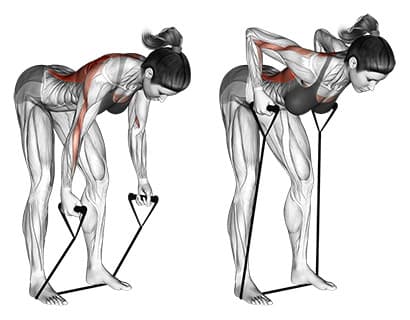
Reverse fly (dumbbells, cables, or machine)
Best for: direct rear-delt hypertrophy with measurable load.
Key difference: more isolation and less constant tension than a band.
Difficulty: moderate (control matters).
Chest-supported row (light)
Best for: upper-back strength without low-back fatigue.
Key difference: more lat/row emphasis; rear delts still work hard if elbows are slightly flared.
Difficulty: moderate.
Prone Y/T/W raises
Best for: light, technique-focused shoulder blade control.
Key difference: very low load; more “control practice” than muscle building.
Difficulty: easy.
What Equipment Do You Need?
You just need a resistance band.
- Best band type: a long flat band or a tube band without an anchor point; you’re pulling against your own grip width.
- Band length: longer bands usually feel smoother; if the band is short, widen your grip so you’re not starting with extreme tension.
- Optional: a mirror helps you keep shoulders down and ribs stacked.
Frequently Asked Questions
Build your plan with Momentum.
Get structured workouts based on your goals, equipment, and training history.