How to Do the Barbell Bent-Over Row (Form, Muscles Worked, Mistakes)
The barbell bent-over row is a lat and upper-back builder that also trains bracing in a hip hinge. Hinge to a steady torso angle, row the bar to the lower ribs, then lower it without standing up. Use it for back thickness and stronger pressing posture.
What Muscles Does the Barbell Bent-Over Row Work?
The barbell bent-over row mainly trains your lats and upper back to pull your elbows behind you and control your shoulder blades. Your biceps assist the pull, while your lower back, glutes, and core hold a strong hip hinge so you can row without your torso moving.
| Role | Muscles | Function |
|---|---|---|
| Primary | Lats, mid traps/rhomboids | Pulls the upper arm back and retracts/depresses the shoulder blades. |
| Secondary | Rear delts, biceps, forearms | Assists the pull and supports grip and elbow flexion. |
| Stabilizers | Lower back, glutes, abdominals | Braces the hinge and keeps the torso angle consistent rep to rep. |
How Do You Perform the Barbell Bent-Over Row?
Hinge with a flat back until your torso is stable, brace your core, pull the bar into your lower ribs with elbows driving back, then lower the bar under control while keeping the same torso angle and tight brace.
- Stance: Stand hip-width with the bar over midfoot and knees softly bent.
- Hinge: Push hips back until your torso is roughly 30-45 degrees from the floor (or as low as you can hold without rounding).
- Brace: Inhale, lock your ribs down, and squeeze your lats so the bar stays close to your legs.
- Start position: Let arms hang straight; keep your neck neutral and eyes on the floor a few feet ahead.
- Row: Pull the bar toward your lower ribs/upper stomach by driving elbows back (not up).
- Control: Pause briefly when the bar touches your torso; keep shoulders away from your ears.
- Lower: Lower the bar slowly until arms are straight again, maintaining the hinge and brace.
- Repeat: Keep the same torso angle for every rep; if you start standing up, the set is done.
What Are the Benefits of the Barbell Bent-Over Row?
The barbell bent-over row builds back strength and thickness while training you to brace and move your shoulder blades under load.
- Back size and strength: Heavy rows load the lats, traps, and rear delts through a big pulling range.
- Grip and bracing practice: You get a lot of time under tension for your grip and trunk, which carries over to many barbell lifts.
- Pressing balance: Strong upper-back muscles help you keep better shoulder position for benching and overhead work.
- Simple progression: Add a rep, add a small plate, or add a pause at the top while keeping the torso still.
What Are Common Barbell Bent-Over Row Mistakes?
The most common mistake is turning the row into a sloppy hinge-and-heave by standing up between reps.
Are you using body English instead of rowing?
Problem: Your torso swings and the bar flies up with momentum. Why it happens: The load is too heavy or you are not bracing. Fix: Reduce weight, row with a brief pause on your torso, and stop the set when the torso angle changes.
Is your lower back rounding?
Problem: You feel the set in your spine more than your back muscles. Why it happens: You hinge too low for your mobility or you lose brace mid-set. Fix: Raise your torso angle slightly, brace harder before each rep, and keep the bar close to your shins and thighs.
Are you shrugging at the top?
Problem: The movement becomes upper-trap dominant and your shoulders ride up. Why it happens: You pull "up" instead of "back." Fix: Drive elbows behind you and keep shoulders down away from ears; pause with shoulder blades set.
Is the bar drifting forward?
Problem: It feels heavy fast and pulls you out of position. Why it happens: You lose lat tension and let the bar hang away from you. Fix: Think "squeeze oranges in your armpits" and keep the bar brushing your thighs.
Is the Barbell Bent-Over Row Good for Beginners?
Yes, if you can hinge and brace without rounding your back. Start light, keep the torso angle higher at first, and consider a chest-supported row or a dumbbell row if you cannot hold position for clean reps yet.
How Much Weight Should You Use for the Barbell Bent-Over Row?
Pick a weight you can row without your torso rising or your lower back rounding, usually leaving 1-3 reps in reserve (RIR). If you feel your hinge changing near the end of a set, that is your cap for that day.
| Goal | Sets | Reps | Rest | Effort |
|---|---|---|---|---|
| Strength | 3-5 | 4-8 | 2-4 min | 1-2 RIR |
| Hypertrophy | 3-4 | 8-12 | 90-150 sec | 1-3 RIR |
| Technique / tempo | 2-4 | 6-10 | 90-150 sec | 2-4 RIR |
Simple 4-week progression (hypertrophy): keep the hinge strict and go Week 1 3x8, Week 2 3x9, Week 3 3x10, Week 4 add 5-10 lb and repeat at 3x8.
How Often Should You Do the Barbell Bent-Over Row?
1-3 times per week works well depending on your total pulling volume and how your lower back recovers. Many lifters like it on the same day as bench press (to balance pressing) or on a lower-body day as their main back lift, then add lighter rows or pulldowns later in the week.
How Does the Barbell Bent-Over Row Compare to the Pendlay Row?
The main difference is that a Pendlay row starts from the floor each rep (more dead stop and power), while a bent-over row usually keeps the bar off the floor and stays under continuous tension.
| Comparison | Bent-over row | Pendlay row |
|---|---|---|
| Start each rep | From the hang | From the floor |
| Feel | More constant tension | More explosive, stricter reset |
| Lower back demand | High (isometric) | High (setup each rep) |
What Are the Best Alternatives to the Barbell Bent-Over Row?
If your lower back limits you before your lats do, choose a supported row; if you want more range of motion or unilateral control, choose dumbbells or cables.
Alternative Exercises



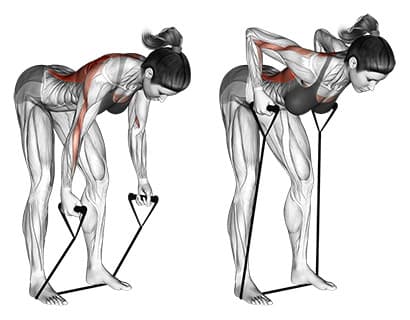
Chest-Supported Row (Dumbbells or Machine)
Best for: Hitting the back hard without your lower back being the limiter. Key difference: Torso support removes most hinge fatigue. Difficulty: Low to moderate.
One-Arm Dumbbell Row (Bench-Supported)
Best for: Unilateral pulling strength and range of motion. Key difference: You can pull each side independently and reduce lower-back fatigue. Difficulty: Moderate.
Seated Cable Row
Best for: Smooth resistance and easy loading in higher rep ranges. Key difference: Less grip and hinge fatigue, easier to keep strict. Difficulty: Low to moderate.
Inverted Row (Bodyweight)
Best for: A home-friendly row that scales by foot position. Key difference: Uses your bodyweight and challenges trunk control differently. Difficulty: Moderate.
What Equipment Do You Need?
- Required: barbell and plates, plus enough floor space to hinge safely.
- Helpful: lifting straps if grip fails before your back, and a belt if it improves your bracing (not mandatory).
- Optional: chalk for grip and flat shoes for a stable stance.
Frequently Asked Questions
Build your plan with Momentum.
Get structured workouts based on your goals, equipment, and training history.